
Key takeaways
- A Langkawi mangrove kayak tour runs through the sheltered channels of Kilim Geoforest Park, part of a UNESCO Global Geopark designated in 2015.
- Expect to see brahminy kites, white-bellied sea eagles, long-tailed macaques, and monitor lizards along the waterways.
- Most tours last two to three hours, suit beginners, and run in small guided groups with all equipment and a safety briefing provided.
- Calm, tidal water and no open-sea crossings make the route accessible to first-time paddlers and families.
- Booking ahead secures a morning slot and a small group, which gives the best wildlife viewing and cooler paddling conditions.
A Langkawi mangrove kayak tour takes you by paddle through the tidal channels of Kilim Geoforest Park, where limestone cliffs, dense mangrove roots, and hunting eagles sit within arm's reach of your kayak. You can expect calm water, a two to three hour outing, a guide the whole way, and realistic chances of spotting eagles, monkeys, and monitor lizards without any prior paddling experience.
This guide walks through the route, the wildlife, the practical details, and how we at Dev's Adventure Tours keep the experience light on the ecosystem.
Paddling Through Kilim's Mangrove Channels
Kilim Geoforest Park sits on the northeastern coast of Langkawi, inside the Langkawi UNESCO Global Geopark. Langkawi earned that global designation in 2015, and the wider geopark spans roughly 92,000 hectares across an archipelago of 99 islands, with limestone formations dated at over 550 million years old, according to UNESCO's official geopark profile.
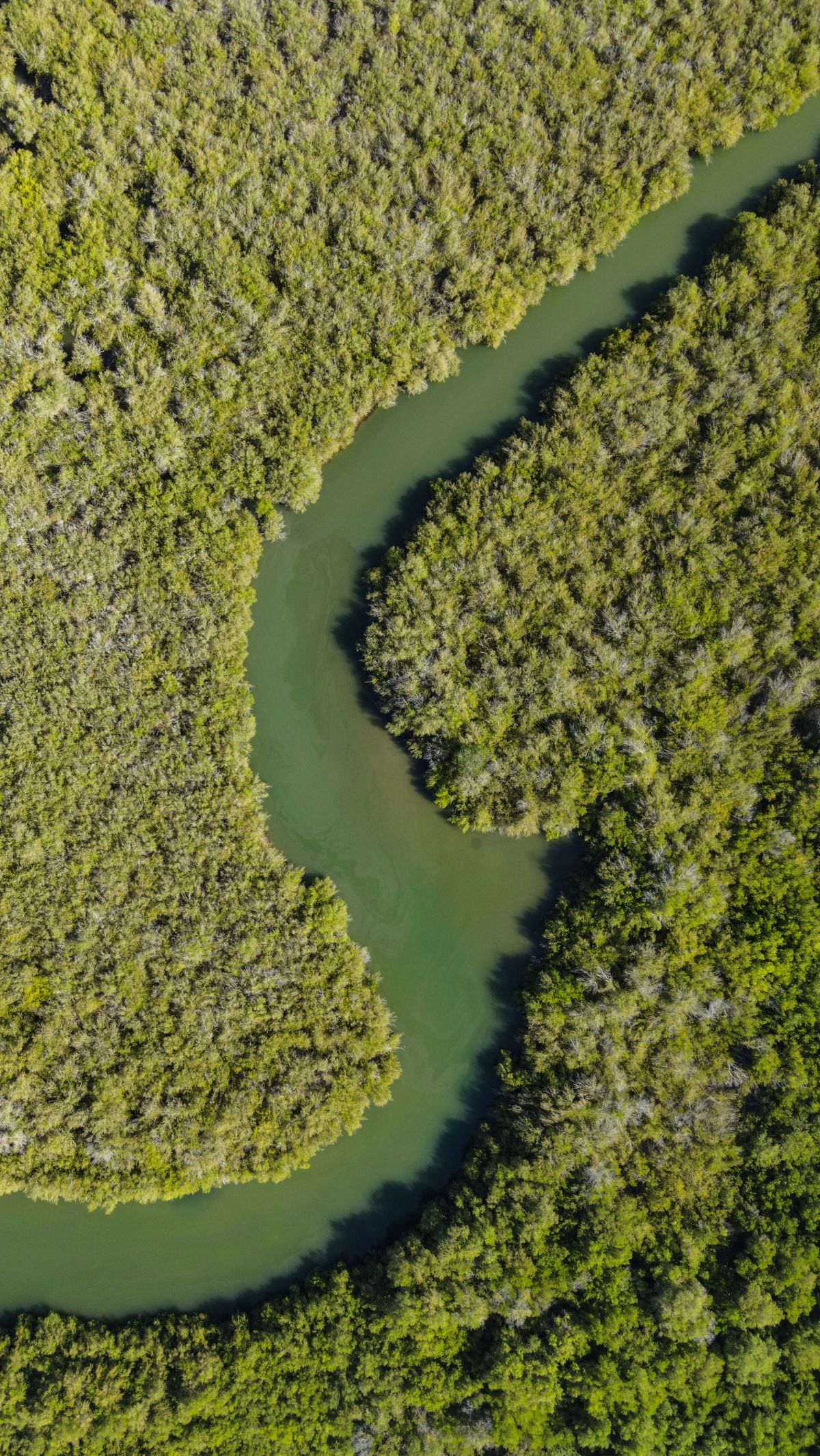
On the water, that geology becomes the scenery. You paddle along narrow channels fringed by mangroves, under overhanging branches, and past sheer karst walls that rise straight out of the river. The main trunk species here belong to the genus Rhizophora, whose arching prop roots create the tangled "walking tree" look that defines the mangrove forest. Those roots are the reason the water stays calm. They break the current, trap sediment, and shelter the channels from the open sea.
The pace is slow and quiet. Because kayaks make almost no noise, you drift close to the bank and into side channels that engine boats cannot reach. That quiet is the whole point. It is what lets you hear a kingfisher before you see it and watch a macaque troop move through the canopy without scattering them.
Wildlife You'll Encounter
The mangroves are a nursery and a feeding ground, so the wildlife shows up reliably. A few species stand out.
- Brahminy kites. This reddish-brown raptor with a white head is the most common bird of prey over Kilim and an unofficial symbol of Langkawi. You will usually see several circling the channels and diving for fish near the surface.
- White-bellied sea eagles. Larger than the kites, these eagles tend to perch high and watch the water. Spotting one holding station on a dead branch is a highlight of most trips.
- Long-tailed macaques. Troops move along the riverbanks and through the mangrove canopy, often foraging for crabs and shellfish at the water's edge.
- Monitor lizards. These large reptiles swim between the roots and bask on mudbanks. At a couple of metres long, they are hard to miss once you learn to scan the banks.
- Mudskippers and kingfishers. At low tide, mudskippers flick across the exposed mud, and several kingfisher species flash blue and orange through the roots.
Sightings are never guaranteed in a wild habitat, but the combination of eagles, monkeys, and monitor lizards is a routine outcome on a morning paddle. Malaysia holds some of the richest mangrove biodiversity in the world, ranking high globally for mangrove area and species diversity, as documented in peer-reviewed research on Malaysian mangroves. Kilim is a compact, accessible window into that richness.
Duration, Difficulty, and Group Size
Most mangrove kayak tours in Langkawi run about two to three hours on the water, plus time for the briefing and a short rest stop. That length suits the tides and keeps the outing comfortable before the midday heat builds.
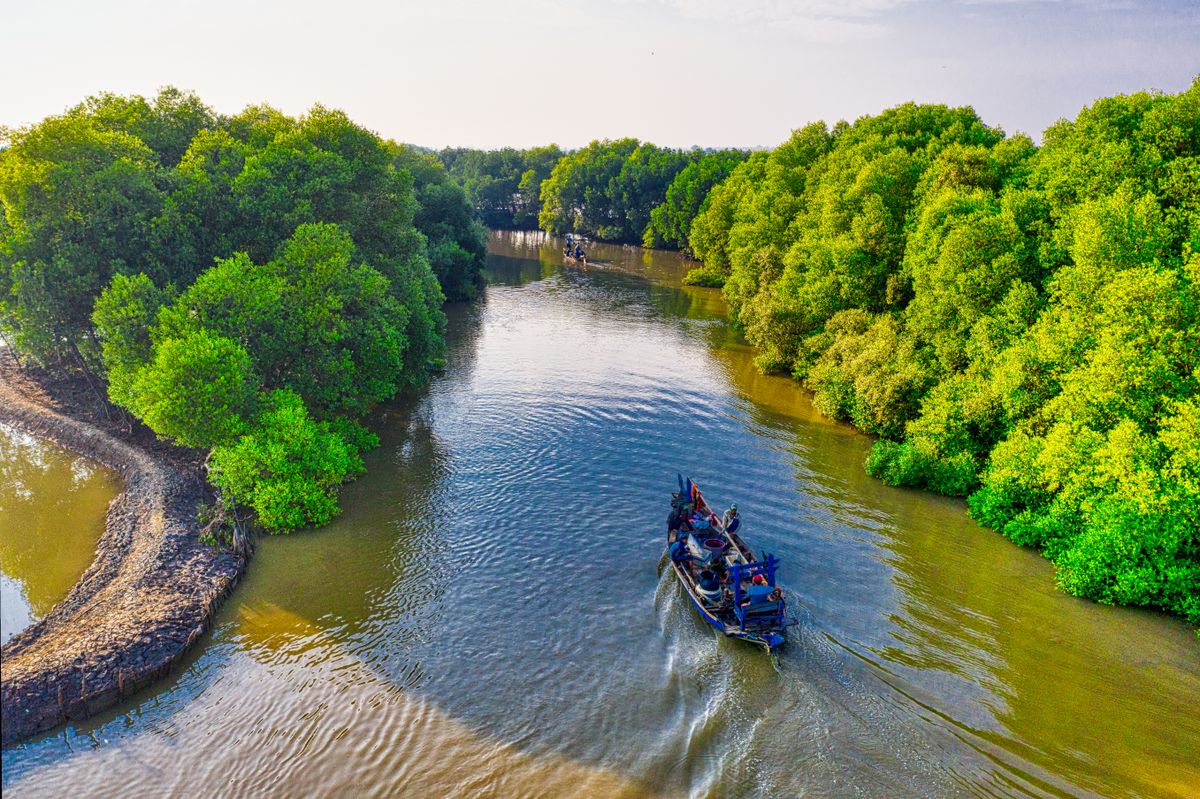
The difficulty is low. The channels are tidal but sheltered, and there are no open-sea crossings, so the water stays flat for most of the route. First-time paddlers manage well, and children usually ride in a tandem kayak with an adult. The main physical demand is a steady, relaxed paddling rhythm rather than speed or strength.
Group sizes stay small on purpose. A smaller group moves quietly, keeps the guide within earshot of everyone, and leaves a lighter footprint on the channels. Small groups also mean you spend less time waiting and more time watching wildlife.
What's Included
A well-run tour handles the logistics so you can focus on paddling. On a Dev's Adventure Tours mangrove trip, that includes:
- A licensed nature guide who reads the tides, sets the route, and points out wildlife and plant life you would otherwise paddle straight past.
- All kayaking equipment, including the kayak, paddle, and a properly fitted life jacket for every paddler.
- A safety briefing before you launch, covering basic strokes, steering, how to stay with the group, and what to do if your kayak tips.
- Drinking water and, on longer tours, a light refreshment stop.
The guide matters more than any single piece of gear. Someone who knows Kilim can tell a brahminy kite from a sea eagle at a glance, time the paddle to the tide, and explain why the mangrove roots and the limestone look the way they do. That context turns a nice paddle into a genuine nature tour.
How Our Eco-Friendly Approach Protects the Mangroves
The mangrove ecosystem is sensitive, and heavy tourism can wear it down fast. Kilim's forest is dominated by Rhizophora mangroves whose root systems stabilise the shoreline and support the whole food web, a pattern confirmed in field surveys of Kilim's plant composition. Protecting those roots protects everything that depends on them.
We run our tours to leave the channels as we found them. Kayaks are a big part of that. They are human-powered, produce no fuel wash, and create none of the noise or wake that larger boats push into the mangrove roots. We keep groups small, stick to established channels, and avoid crowding wildlife or feeding animals, which keeps their behaviour natural. We also brief every group on simple rules: no litter, no touching the roots or reaching for animals, and a respectful distance from nesting birds.
Dev's Adventure Tours has run nature trips in Langkawi since 2006, and that long relationship with the same waterways is a practical reason to tread lightly. A degraded channel is a worse tour, so keeping Kilim healthy and keeping the business healthy point in the same direction.
How to Book and What to Bring
Book ahead, especially for a morning slot. Early departures give you cooler air, more active wildlife, and calmer light on the water, and the small-group format means popular times fill up. You can reserve a mangrove kayak tour directly through the Dev's Adventure Tours website and pick a date that fits your trip.
Pack light and plan to get a little wet:
- Reef-safe sunscreen and a hat
- A quick-dry shirt and sandals or shoes that can get wet
- A dry bag or waterproof case for your phone and valuables
- Drinking water, even though water is provided
- Insect repellent for the shaded channels
Leave anything you cannot afford to drop in the water back at your accommodation. A waterproof phone pouch is the one item most paddlers wish they had brought.
If you have a free morning in Langkawi and want to see the eagles, monkeys, and mangroves at close range, book a Kilim kayak tour for the earliest available departure and arrive a few minutes early for the briefing. That single choice, going early, does more for your experience than any piece of equipment you could pack.
Frequently asked questions
Do I need kayaking experience for a Langkawi mangrove kayak tour?
No. The Kilim channels are calm and tidal with no open-sea crossings, so first-time paddlers manage well after a short safety briefing. A guide stays with the group the whole way.
How long does a mangrove kayak tour in Langkawi take?
Most tours last about two to three hours of paddling plus briefing time. Morning departures are popular because the air is cooler and wildlife is more active.
What wildlife will I see on the tour?
Common sightings include brahminy kites, white-bellied sea eagles, long-tailed macaques, monitor lizards, kingfishers, and mudskippers in the mangrove mud at low tide.
What should I bring?
Bring reef-safe sunscreen, a hat, a quick-dry shirt, water, and a dry bag or waterproof case for your phone. Wear sandals or shoes that can get wet.
Is the tour suitable for children?
Yes. The calm water and short distances suit families. Children usually share a tandem kayak with an adult, and life jackets are provided for everyone.